Most often during our travel experiences, taxi drivers turn good travel companions. Giving the local flavour to the many stories behind the places or simply by joining the conversations with their points of views or sometimes sporty enough to gauge the moods of the travellers and offering to take detours that might match their interest. This time however, we had a tad different experience. We had two vehicles for our group and a third vehicle joined with some other passengers and since the drivers knew each other, they decided to move as a convoy. A tightly packed schedule meant hurrying after the morning market visit at the Dal Lake and setting off to Kargil before breakfast. Since there was a possibility of curfew being declared again, it made sense to get out of Srinagar at the earliest.
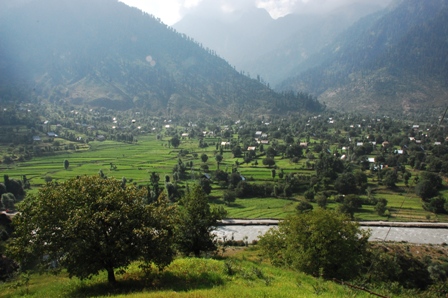
The Kashmir countryside slowly revealed itself with its breathtaking beauty. Morning sun rays filtered through the clouds and gave many hues and shades to the green valley. Roaring rivers by the road. First sight of baraf (ice) and glaciers. Winding, dangerously narrow and unpaved roads climbing up from Baltal– all made our day. Though we managed to stop by at a few places of interest, the other two vehicles zoomed ahead despite our friends pleading with the driver for short breaks; not even stopping for lunch. The excuse he gave was that he had got instructions not to stop and reach Kargil as early as possible. Our driver also tried his best not to stop, but since the team leader was with us, he couldn’t come up with such an excuse.
TheZoji pass (or Zoji-la), meaning the ‘Path of Blizzards’ is the second highest mountain pass on the Leh–Srinagar road. At a height of 11,575 ft, it was the first of the many Las we were to cross in the coming days. Closed for traffic during winter, Zoji-la is where one of the fiercest battles happened between India and Pakistan between 1948 and 1949, when Pakistan tried to take over Ladakh. It was the first ever war in the world where tanks were taken to such high altitudes. Roads were cut by Indian army in a matter of days and many a time soldiers had to push the tanks up. Finally, it was a decisive victory. A stop at the Zoji-la war memorial. A moment of prayer and gratitude to those who laid their lives for the country. A few snaps with the soldiers.
Ahead of Zoji-la is Drass, the second coldest inhabited place in the world (first being Siberia). Temperatures here fall even up to –65ºC during winter. Drass is considered as the Gateway to Ladakh. It is in Drass that the Kargil War was fought in 1999. The small town of less than 2,000 people was shelled. After Drass is the Vijay Path, the 1999 War Memorial. A small army museum, a parade ground, and a souvenir shop complete the war memorial at the foothills of Tiger Hill.
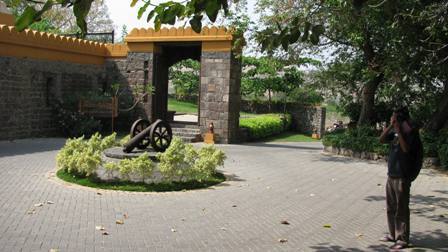
As we approach the entrance, the doorman ceremoniously lifts the bugle and plays. A little embarrassed, we enter the fort. More welcome ceremonies follow. A lady applies sandal paste on our foreheads while a gentleman waits with perfumed towels.
Located at about 20-odd km from Pune, off the Pune-Saswad road, this fort-converted-hotel is run by the Orchid Group. An eighteenth century fort built by Pilaji Jadhavrao (a famous general of in the army of Chatrapathi Shahuji, grandson of Chatrapathi Shivaji), Jadhavgad is small and less splendorous compared to other Maratha forts. But it has a quaint charm and the redevelopment is done in a way that retains and accentuates this. The original fort had only one building and an outer wall. Deluxe rooms and suites built along the wall gives a feeling that we are indeed in a fort. The royal bedroom is now the royal suite. Royal tents that dot the campus suit those who prefer a little bit of outdoor experience.
This resort is also considered as world’s first museum hotel. A museum named Aai (mother in Marathi) displays rare, historic items from the personal collection of Mr Kamat who owns the Orchid Group. An interesting visit. Photography is not allowed inside the museum.
Chajja, the multi-cuisine restaurant offers a fine spread. Small eaters we are, we couldn’t give justice to the buffet lunch. But whatever we stuffed ourselves with was excellent. Another dining option is the open-air restaurant Payatha that serves traditional Maharashtrian fare.
[HTML7]
A tour of the Fort will make your pocket lighter by Rs 500. But this can be adjusted against the restaurant bill. The lunch buffet at Chajja was Rs 650 plus taxes (without alcohol).
The descendants of Chatrapathi Shahuji live close by and the Orchid Group has taken the Fort on a 99-year lease. And they’ve done a good job in preserving it.
It’s in the long list for UNESCO’s World Heritage Sites. Whether it will get the heritage tag or not, the Matheran Light Railway is a fun ride as the small bogies laboriously climb up and down the hill.
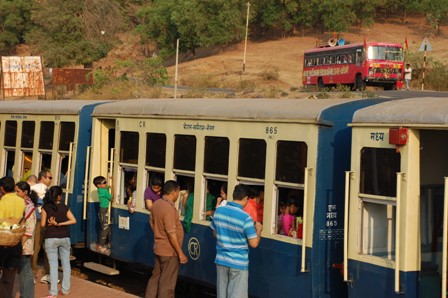
So when a friend and Mid-Day reporter decided to do a story on this to-be or not-to-be heritage rail, we decided to tag along. Being a Saturday, the general seats were all taken. So we went First Class, which is an eight-seater cabin with cushioned seats.
Though not the fastest way to reach Matheran (meaning ‘wooded head’), a tiny hill station that lies at around 2,700 ft above sea level, the toy train gives unusual glimpses during its two-hour journey. It climbs about 800 m along a 21-km railway line. There is one tunnel, aptly named “One Kiss Tunnel, as well as two stations—Jumma Patti and Water Pipe—on the way. Stations serve as crossing points as well as refreshment breaks. During a hot day, the guard will even let you finish your drink before giving the green signal. Ticket Examiner moves between bogies by holding on to the windows and walking along the sides of the train. So are some vendors of fruit juices and biscuits.
The toy train starts from Neral, a small station that is almost two hours away from Chatrapathi Shivaji Terminus (CST). Tickets can be booked through IRCTC website.
Matheran Hill Railway was conceptualised in 1900 and the construction started in 1904. It was built by Abdul Hussein Adamjee Pheerboy. The trains run on 2-ft narrow gauge rail and the route has the sharpest curves of all hill railways.
Kanchipuram – Mahabalipuram (Mamallapuram) is barely 70 kms and is connected by good roads. Not a wise idea to combine both these places on the same day as you are unlikely to do justice to both the places.
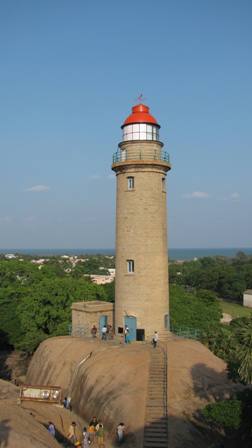
Mamallapuram is a 7th century port city built by Pallavas and is supposeed to be named after the Pallava King, Mamalla. Mamallapuram is classified as UNESCO World Heritage site. With some of the rock cut temples resembling the Buddhist/Jain architecture, it is believed that the Pallava kings bought artisans and sulptors from central India after they won over the Chalukyas.
We unfortunately missed the most important site – The shore temple, which was closed by the time we reached. We had to limit our explorations around the rock cut temples. The annual Mamallapuram Dance Festival was on we caught a glimpse of some folk dance.
Mamallapuram is on the Chennai – Pondicherry East Cost highway (ECR) and connectivity is not an issue. Tamilnadu has one of the best bus network in the country and the deal just got better with the introduction of new Volvo city buses connecting Mamallapuram with Chennai city.
The year 2009 ended on a good note with a packed weekend. We were back to Chennai after 5 years for a family get together. But we did manage to plug-in an active one-day travel.
It is a matter of shame that we lived in Chennai for 7 years and not even once we visited Kanchipuram or Mahabalipuram. We were not in our elements then for sure.
So it was Kanchipuram and Mahabalipuram. We planned the timings so that we will be at Kanchipuram Saravana Bhavan for breakfast.
Kanchipuram is known as the city of temples and is one of India’s seven sacred cities, second holiest after Varanasi. The temples were built by different dynasties as the city changed hands. The Pallavas from 6th to 8th century AD, followed by Cholas and the Vijay Nagar kings. Kanchipuram is also unique in the sense that it is a seat of the two sects of Hinduism – Vaishnavism and Saivism. The Varadaraja Perumal temple is a centre for Vaishnavism, the Ekambaranathar temple is a Saiva centre, with the Kamakshi Amman temple tucked in between.
It requires a minimum of one full day to explore Kanchipuram completely. And yet again – at one more place, we made a promise – to come back.
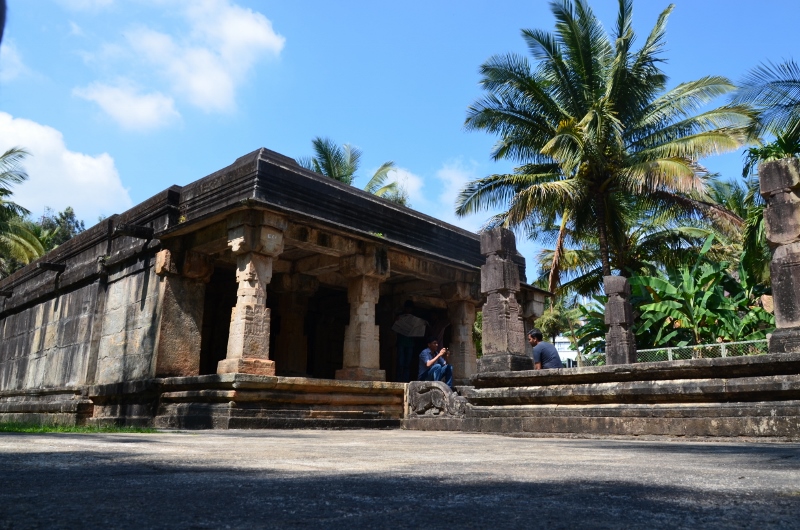
One of the stories from our TGDC trail was about our search for old Jain temples in Wayanad in Kerala. There are a few of them, either taken over by ASI or left to crumble, like the one we managed to visit.
After visiting the place and reading a little more about Jain temples in Kerala, a realisation dawned on us – Most temples in Kerala were earlier Jain or Buddhist temples. We had earlier read that the famous Sabarimala temple (with close to 5 crore visitors a year, it is supposed to be the second biggest annual pilgrimage after Mecca) was originally a Jain temple.
Jainism and Buddhism came to Kerala as early as 200 or 300 AD and flourished till 1000 AD. The arrival of Vedic brahmins to Kerala from 800 AD and the royal patronage they got, resulted in many of these shrines getting converted into Hindu temples. The massive Vadakkumnatha temple in the heart of Thrissur city was once a Buddhist temple. The Koodalmanikyam temple in Irinjalakkuda was a Jain temple.
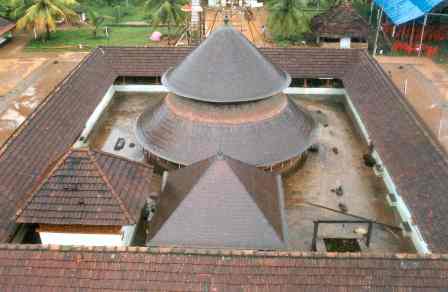
It is said that all temples that are in circular shape were Buddhist temples and all those are in square shape were Jain temples.
(photo courtesy: from the website http://www.thrikodithanam.org)
At one level, on hindsight, the ‘Search’ per se had no meaning. Because we grew up around those very same Jain and Buddhist temples!
The arrival of Vedic brahmins led to some radical changes in Kerala society, one of them being the rigid case system. The historical bits made an interesting read. Many stories we had heard as kids have larger and different stories behind it. While searching for information on Jain temples, we also ended up discovering some interesting and informational websites and blogs.
Check out these: http://historicalleys.blogspot.com written by Mr Manmadhan, based in California – extensively researched and exhaustive.
http://www.thrikodithanam.org/intro.htm– a website about a particular temple in Kerala and some interesting history. (some of the information in this entry is sourced from this website)
We have seen that this blog on Internet Explorer is not well presented as the layout is getting jumbled. Also the complete page is not getting loaded. This is best viewed in Firefox.
You can download Firefox here.