Archive for the 'Places' Category

Aug 31 2010

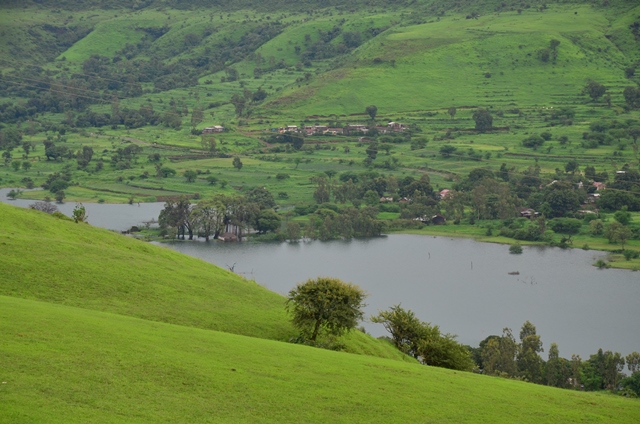
5 Monsoon Weekend Drives from Mumbai

Published by thecouple under Places

If getting out of Mumbai means Lonavala and Khandala for you, then read no further. Not that Lonavala and Khandala aren’t beautiful. They are indeed. But then, let us grow up.

Here are five weekend monsoon getaways from Mumbai.

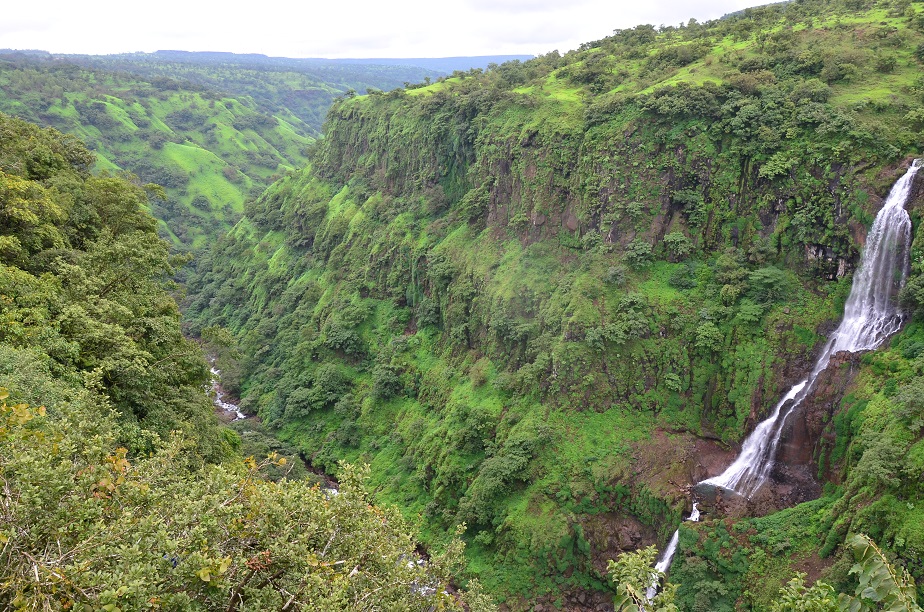
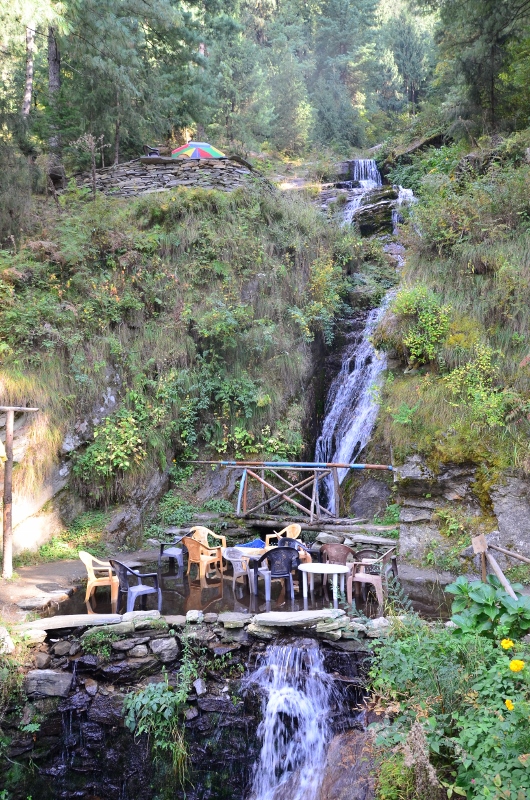
1. Go beyond Malshej Ghat. Malshejghat is a regular and hugely popular monsoon weekend getaway. Misty mountains and unlimited waterfalls. An MTDC resort facing the valley. Most people from Mumbai travel to Malshejghat via Kalyan for a day trip or a weekend trip. Here is another alternative: Hit the Mumbai–Pune expressway and take a left at Wadgaon to Chakan and then proceed to Narayangaon and Junnar. Stay overnight at Junnar. Spend the evening at Shivneri fort. Leave early morning. Junnar to Lenyadri and then to Malshejghat. The drive from Junnar to Malshej ghat is simply awesome. Stop for lunch at Malshejghat. Laze around and reach Mumbai by late evening.

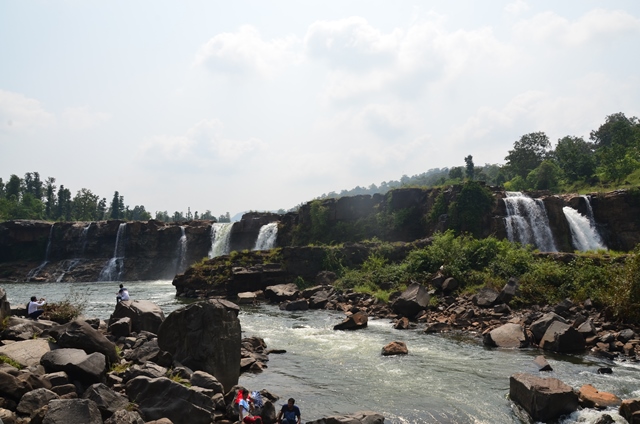
2. Saputara. Saputara is a tiny hill station in Gujarat, at the Maharashtra–Gujarat border. Snuggled in the tribal district of Dangs, Saputara has some interesting drive through the forests and by the rivers. Take off to Nashik from Mumbai and then via Dindori and Vani to Saputara. A total of over 250 km. Stay overnight at Saputara. Gujarat tourism has hotels and there are a few private hotels as well. Walk to the sunset point. And to the sunrise point the next morning. Once again a circular trip. Return via Waghai, Vansda, Chikli and Valsad (a total of 345 km). Stop by the massive Gira waterfalls before Vansda. Vansda National Park is closed during monsoons.

3. Igatpuri via Jawahar. Igatpuri is also well-known and popular weekend destination. However, for the monsoon driving pleasure, take this longish route. Get on to the Western Expressway. About 60 km from Borivali is Manor. Take a right and via Vikramghad, reach Jawahar. At about 1,800 ft above sea level, Jawahar is also a mini hill station. Either stay overnight at Jawahar with some local sightseeing thrown in or head straight to Igatpuri. Igatpuri too has some options to stay. Return via Shahapur, Kalyan and Thane.

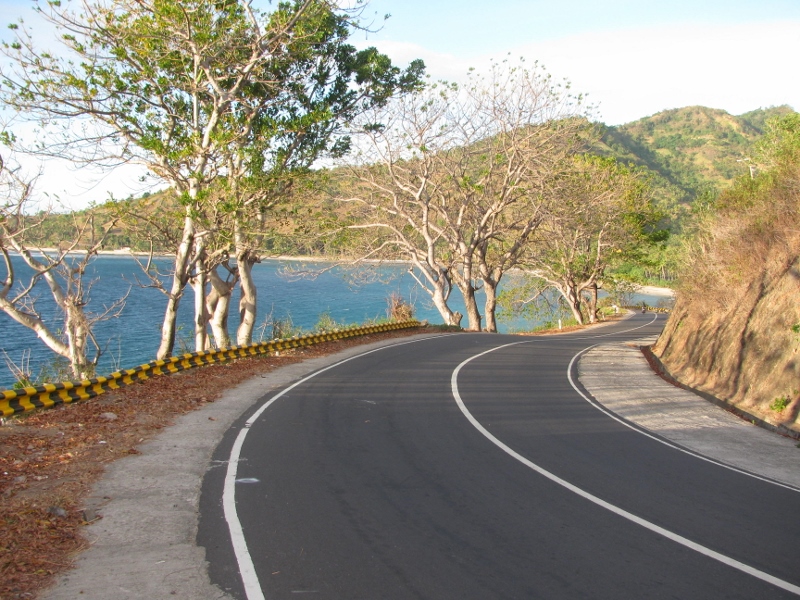
4. Coastal ride to Guhagar. Take the Mumbai–Goa highway till Khed. At Khed, get out of the highway and take a right to Dapoli. From Dapoli to Dhabol. Take your vehicle across the river on a boat and head to Guhagar. Guhagar is one street village/town with clean beaches. There are hotels, but look for some homestay. Every one in the village knows each other and someone will guide you. Next morning, head to Velneshwar beach and then to Chiplun. From Chiplun head back to Mumbai through the Mumbai–Goa highway.


5. Coastal ride to Harihareshwar via Murud–Janjira. Mumbai to Alibaug and then to Murud. One option is to stay overnight at Murud. Though the beach is clean, it might get overcrowded on weekends. A better option might be to continue to Hairhareshwar on the same day. Take the narrow roads through various villages to Srivardhan and then to Harihareshwar. Harihareshwar has a nice MTDC resort. There are a few private resorts as well. Head back to Mumbai next day around lunch time.

4 responses so far

Aug 22 2010

Himalayan Safari Tales #4 – Srinagar to Kargil

Most often during our travel experiences, taxi drivers turn good travel companions. Giving the local flavour to the many stories behind the places or simply by joining the conversations with their points of views or sometimes sporty enough to gauge the moods of the travellers and offering to take detours that might match their interest. This time however, we had a tad different experience. We had two vehicles for our group and a third vehicle joined with some other passengers and since the drivers knew each other, they decided to move as a convoy. A tightly packed schedule meant hurrying after the morning market visit at the Dal Lake and setting off to Kargil before breakfast. Since there was a possibility of curfew being declared again, it made sense to get out of Srinagar at the earliest.

dsc_0262

dsc_0273

dsc_0294

The Kashmir countryside slowly revealed itself with its breathtaking beauty. Morning sun rays filtered through the clouds and gave many hues and shades to the green valley. Roaring rivers by the road. First sight of baraf (ice) and glaciers. Winding, dangerously narrow and unpaved roads climbing up from Baltal– all made our day. Though we managed to stop by at a few places of interest, the other two vehicles zoomed ahead despite our friends pleading with the driver for short breaks; not even stopping for lunch. The excuse he gave was that he had got instructions not to stop and reach Kargil as early as possible. Our driver also tried his best not to stop, but since the team leader was with us, he couldn’t come up with such an excuse.

dsc_0324

dsc_0331

dsc_0350

dsc_0352

The Zoji pass (or Zoji-la), meaning the ‘Path of Blizzards’ is the second highest mountain pass on the Leh–Srinagar road. At a height of 11,575 ft, it was the first of the many Las we were to cross in the coming days. Closed for traffic during winter, Zoji-la is where one of the fiercest battles happened between India and Pakistan between 1948 and 1949, when Pakistan tried to take over Ladakh. It was the first ever war in the world where tanks were taken to such high altitudes. Roads were cut by Indian army in a matter of days and many a time soldiers had to push the tanks up. Finally, it was a decisive victory. A stop at the Zoji-la war memorial. A moment of prayer and gratitude to those who laid their lives for the country. A few snaps with the soldiers.

dsc_0354

dsc_0367

dsc_0369

Ahead of Zoji-la is Drass, the second coldest inhabited place in the world (first being Siberia). Temperatures here fall even up to –65ºC during winter. Drass is considered as the Gateway to Ladakh. It is in Drass that the Kargil War was fought in 1999. The small town of less than 2,000 people was shelled. After Drass is the Vijay Path, the 1999 War Memorial. A small army museum, a parade ground, and a souvenir shop complete the war memorial at the foothills of Tiger Hill.

dsc_0371

dsc_0381

dsc_0382

One response so far

Aug 08 2010

Himalayan Safari Tales #3 – Srinagar: The bazaar and the conversations

Published by thecouple under Places

“A few centuries before the Christ, the Athenians developed ‘agora’ as a place of palaver, long parley or conversation, which doubled as a location for exchanging goods and services. With some variation this pattern repeated across the ancient world. From Persia to India, market places came to be known as ‘bazar’, derived from the Pahlavi term ‘vacar’ or ‘baha-char’, meaning the ‘place of prices’. And yet the bazaar was as much a place for social connectedness as for striking a deal and determining the ‘price’”

- from Bazaars, conversations and freedom by Rajni Bakshi

market-a3

The Dal lake by itself is an eco-system. Small island villages with families including animals, house boats docked closer to the owners’/keepers’ houses, the floating morning market and traders trying to sell their wares to tourists on a shikara ride. Large shops that sell everything from garments to groceries on boats docked permanently in the lake. The floating morning market happens at a ‘village square’ – except that it is not a square and it is in water. Traders exchange their merchandise including vegetables to chocolates to flowers while some sip the hot Kashmir tea ‘Khawa’.

market-a4

market-a1

Families perhaps owned small boats for their conveyance across the lake, as many of us own cycles or motor bikes in the plains. Women and small children were at ease with their boats and the oars.

market5

familes2

We were keen to speak to a few people to understand what is that they feel about the Kashmir issue. And reactions were mixed. Everyone had their own interpretation of history, why Kashmir should be a freed (from both India and Pakistan). Some of them consider their roots in Iran and Iran’s spiritual leader as their own leader. It is perhaps more complex than it seems. Or is made complex with leaders driving different political agendas. One thing clear is that the average Kashmiri yearns for a peaceful life far away from terrorism and counter-terrorism.

families1

market6

Photo Credits: 1,2 & 3 – Arif Khan

One response so far

Aug 08 2010

Himalayan Safari Tales #2 – Srinagar: The calmness that belies all

Published by thecouple under Food,Places

For a valley city whose name symbolizes wealth and abundance, peace certainly was in not in abundance. Decades of strife, uncertainty, and violence perhaps has taken its toll.

lake1

lake2

The calm and serene Dal lake perhaps belies all. The quite witness. Taking care of hundreds of families who are dependent on it. Colorful shikaras silently offering rides for the travelers. The shikaras, the house boats and the trade are still the main source of income.

dsc_0101

lake4

Dal lake lies in the catchment area in the Zabarwan mountain valley, which surrounds the lake on three sides and is a part of a natural wetland and covers over 22 sq kms. With its basins, interconnected causeways, houseboats, houses, floating gardens, Dal lake is rich in fauna and has been a regular tourist attraction for many years.

lake5

lake6

After a short ride in a colourful shikara, a sumptuous lunch awaited us in the traditional but well-furnished deluxe house boat. Kashmiri dum aloo and other curries tasted better with the Kashmiri masala, unlike the pungent Punjabi masala that often passes of as north Indian food in other parts of the country.

One response so far

Aug 08 2010

Himalayan Safari Tales #1 – Srinagar: The day after the curfew

Published by thecouple under Places

Srinagar was waking up after intermittent curfew days. The roads were so crowded and jammed that it took more than an hour from the airport to the Dal lake. Everyone was in a hurry to get the work done and be back in the safety of their houses, for no one knew when the curfew would return. Buses were packed to the brim that many were even sitting on the roofs and hanging on to the ladders at the back. Army jawans tried helping the local traffic police in managing the traffic. But it was chaos mostly.

srinagar-streets3

srinagar-streets1

We began our 2-week long Himalayan Safari from Srinagar, which we chose to acclimatize before exploring the higher parts of Himalayas that lie in Ladakh ranges. The warm city, calm Dal lake, friendly locals, great food, and of course, the mesmerizing natural beauty warmed us for the safari ahead.

srinagar-streets4

One response so far

May 09 2010

Jadhav Gadh. Exuding old world charm

As we approach the entrance, the doorman ceremoniously lifts the bugle and plays. A little embarrassed, we enter the fort. More welcome ceremonies follow. A lady applies sandal paste on our foreheads while a gentleman waits with perfumed towels.

jaghad0011

Located at about 20-odd km from Pune, off the Pune-Saswad road, this fort-converted-hotel is run by the Orchid Group. An eighteenth century fort built by Pilaji Jadhavrao (a famous general of in the army of Chatrapathi Shahuji, grandson of Chatrapathi Shivaji), Jadhavgad is small and less splendorous compared to other Maratha forts. But it has a quaint charm and the redevelopment is done in a way that retains and accentuates this. The original fort had only one building and an outer wall. Deluxe rooms and suites built along the wall gives a feeling that we are indeed in a fort. The royal bedroom is now the royal suite. Royal tents that dot the campus suit those who prefer a little bit of outdoor experience.

jghad002

This resort is also considered as world’s first museum hotel. A museum named Aai (mother in Marathi) displays rare, historic items from the personal collection of Mr Kamat who owns the Orchid Group. An interesting visit. Photography is not allowed inside the museum.

Chajja, the multi-cuisine restaurant offers a fine spread. Small eaters we are, we couldn’t give justice to the buffet lunch. But whatever we stuffed ourselves with was excellent. Another dining option is the open-air restaurant Payatha that serves traditional Maharashtrian fare.

[HTML7]

A tour of the Fort will make your pocket lighter by Rs 500. But this can be adjusted against the restaurant bill. The lunch buffet at Chajja was Rs 650 plus taxes (without alcohol).

The descendants of Chatrapathi Shahuji live close by and the Orchid Group has taken the Fort on a 99-year lease. And they’ve done a good job in preserving it.

12 responses so far

May 06 2010

Of Faith & Creativity – Part II

Published by thecouple under Arts & Culture,Fun,Places

Most of us have grown up with the philosophy of seeing God in everything – in every stone, every tree, every human being, every animal and what not. Roadside temples are not anything new in India. We have earlier written about a tree with a slight resemblance to an elephant’s trunk turning into Ganpathi idol and a street side temple. (Of Faith & Creativity).

dsc_02051

This is another interesting version. A huge rock in the Matheran hills turning into another massive Ganpathi. Clever use of colours and artistic rendering have converted this huge rock into a divine statue complete with a mouse at its feet.

img_3612

This interesting piece of art is visible during the train ride from Neral to Matheran. The trekking route from Peb Fort to Matheran also passes through this new temple.

dsc_0204

4 responses so far

May 03 2010

A Toy Ride. A Joy Ride

Published by thecouple under History,Places

It’s in the long list for UNESCO’s World Heritage Sites. Whether it will get the heritage tag or not, the Matheran Light Railway is a fun ride as the small bogies laboriously climb up and down the hill.

dsc_0008

dsc_0054

So when a friend and Mid-Day reporter decided to do a story on this to-be or not-to-be heritage rail, we decided to tag along. Being a Saturday, the general seats were all taken. So we went First Class, which is an eight-seater cabin with cushioned seats.

dsc_0079

dsc_00911

Though not the fastest way to reach Matheran (meaning ‘wooded head’), a tiny hill station that lies at around 2,700 ft above sea level, the toy train gives unusual glimpses during its two-hour journey. It climbs about 800 m along a 21-km railway line. There is one tunnel, aptly named “One Kiss Tunnel, as well as two stations—Jumma Patti and Water Pipe—on the way. Stations serve as crossing points as well as refreshment breaks. During a hot day, the guard will even let you finish your drink before giving the green signal. Ticket Examiner moves between bogies by holding on to the windows and walking along the sides of the train. So are some vendors of fruit juices and biscuits.

dsc_0095

dsc_0121

The toy train starts from Neral, a small station that is almost two hours away from Chatrapathi Shivaji Terminus (CST). Tickets can be booked through IRCTC website.

dsc_0156

dsc_0167

Matheran Hill Railway was conceptualised in 1900 and the construction started in 1904. It was built by Abdul Hussein Adamjee Pheerboy. The trains run on 2-ft narrow gauge rail and the route has the sharpest curves of all hill railways.

dsc_0234

dsc_0282

5 responses so far

May 02 2010

Mumbai winter visitors turn pink

By this time, they would’ve already set off to Kutch or getting ready for the journey. When we met them in December, they were busy feeding on the algae in the Sewri mudflats.

dsc_0091dsc_0135

Flamingos migrate to Maharashtra during winter after spending the breeding season in Kutch, Gujarat. Sewri, a port area in Mumbai, is one of their favourite hangouts. How did they choose to come to this derelict area?  Maybe, the rich algae found in the muddy tracts that get exposed during low tides. Feeding on these algae that have a carotenoid pigment, these migratory birds turn rich pink by the time they are ready to move to Kutch for breeding.

dsc_0178

dsc_0192

We reached Sewri in the morning during high tide. We could see a large flock floating in the water. As time passed, thousands more joined the gang. Asif from Nature Knights led us to a shaded spot on a barge that was being built. We would’ve got terribly tired waiting till noon in the hot sun and would not have stayed for long. Spreading our plastic sheet, we sat there with our cameras, binoculars, water, and snacks.

dsc_0197

dsc_0205

Slowly, as the tide started receding, the birds moved closer to us. By around 12, they were just below us rubbing their beaks in the mud and filtering out algae from the water using the tiny hairs that line the inside of their bills. We watched them in awe in utter silence for some time, when a boisterous group of people scared them. As they took flight, we cursed the noisy group and wound up the birding session organised by Nature Knights.

dsc_0219

dsc_0247

The effluents from the chemical and oil companies around Sewri have reportedly been polluting the water in this area. And this polluted water produces the algae, which is a staple food for flamingos. Isn’t it a bit of contradiction? Conservation supported by pollution! However, studies reveal that the chemical content of the water has been steadily rising and it could be harmful to the flamingos in the long run.

dsc_0253

dsc_0264

Two types of flamingos come to Sewri—lesser flamingos in large numbers and greater flamingos in small numbers. Size alone differentiates them. Flamingos are grey when they are born and turn white as they become juveniles. The adults, as they get ready to breed, gradually turn pink.

dsc_0318

Check out the tide time table here and plan your visit accordingly.

3 responses so far

Apr 04 2010

The enchanted gardens @ Pune

Published by thecouple under Places

It is a hard-to-miss board—The Enchanted Gardens—on the Mumbai-Satara highway, just after the Express Way ends in Pune.

gardens1

We have passed this board many a time, each time postponing the visit. But during our recent drive to Jadhavghad, we dropped by and got enchanted, as the name suggests.

gardens2

Spread across 1,20,000 sq ft, Enchanted Gardens claims to be one of the largest nurseries in India. They also have a network of farms, totalling an area of 60 acres.

gardens3

The sheer variety of plants fascinated us. We obviously haven’t seen or heard about most of them. Many indoor, outdoor, flowering, and non-flowering plants as well as saplings of fruit trees thrive inside the vast greenhouse. Some exotic vegetables too dot the space.

gardens4

This miniature pineapple was one among the many surprises.

gardens5

A large portion is dedicated to garden accessories such as metal stands, plant holders, terracota pots, pebble stones, sprayers, and other decorative items.

gardens6

gardens7

gardens8

Worth a visit during your drive to Pune.

5 responses so far

Next »

  • Mitsubishi – The Great Driving Challenge

    Photobucket
  • ————————————————————————

  • Recent Posts

  • Recent Comments

  • Archives

  • Tags

    Adventure Beaches Bird Sanctuary Bordi Chiplun Dandeli Ecotourism English Fun Guhagar Harihareshwar Himalayas Homestay Kalaghoda Karnataka Kashmir Kerala Kollam Konkan Lonar Mahabaleshwar Maharashtra Malvan Mangalore MTDC Mumbai Nagpur Nashik Pune Ratnagiri Sahyadris Sanjay Gandhi National Park Saputara Shenkottai Sindhudurg Solapur Srinagar Tadoba TGDC the great driving challenge Trek Velneshwar Western Ghats Wildlife Wildlife Sanctuary
  • Categories

  • Nature Blog Network
  • Photobucket
  • IndiBlogger - Where Indian Blogs Meet Blog Flux Directory

    Travel blogs